
Introduction to Yemista
Yemista, a quintessential dish in Greek cuisine, features bell peppers beautifully stuffed with a variety of ingredients, exemplifying the vibrant flavors and textures typical of Mediterranean fare. The word “yemista” translates to “stuffed,” aptly reflecting the dish’s preparation where fresh vegetables, most commonly bell peppers, are filled with a savory mixture of rice, herbs, and often minced meat, though vegetarian versions are also prevalent. This beloved dish holds a special place in the hearts of Greeks, often serving as a symbol of hospitality and culinary tradition.
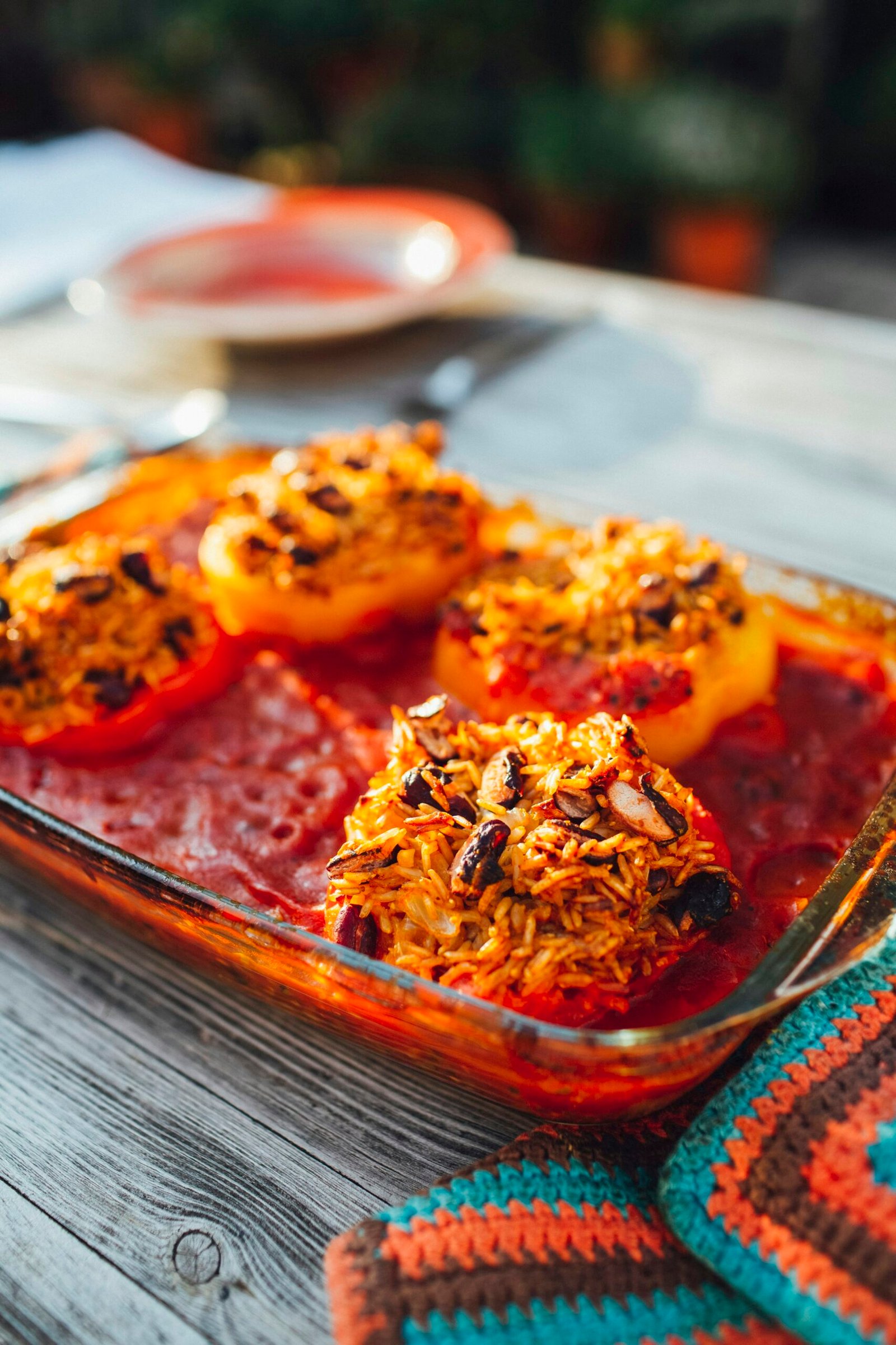
The origins of Yemista can be traced back to the agricultural practices of the Greeks, who utilized seasonal produce in their cooking. Bell peppers, along with tomatoes and zucchini, became popular candidates for stuffing due to their naturally hollow structure, which easily accommodates a variety of fillings. Historically, Yemista reflects the resourceful nature of Greek cuisine, allowing cooks to make the most of locally sourced ingredients. The dish is not only vibrant in color but also in flavor, with each bite offering a delightful combination of tender vegetables and aromatic spices.
Ingredients and Variations
🛒 Ingredients (Serves 4–6)
✅ 6 large bell peppers (any color), tops cut off and seeds removed 🌶️
✅ 250g (1/2 lb) ground beef or lamb (optional for vegetarian version) 🥩
✅ 1 cup uncooked rice 🍚
✅ 1 medium onion, finely chopped 🧅
✅ 2 cloves garlic, minced 🧄
✅ 2 medium tomatoes, grated or finely chopped 🍅
✅ 1/4 cup olive oil 🛢️
✅ 2 tbsp tomato paste
✅ 2 tbsp fresh parsley, chopped 🌿
✅ 1 tbsp fresh mint or dill, chopped 🌿
✅ Salt & pepper, to taste 🧂
✅ 1 ½ cups water or vegetable broth 💧
✅ Optional: crumbled feta cheese for topping 🧀
Yemista, the traditional Greek stuffed bell peppers, is a dish that embodies both simplicity and richness. The primary ingredients typically include vibrant bell peppers, which serve as the versatile vessels for the stuffing, along with staple ingredients such as rice, ground meat, herbs, and spices. Bell peppers are chosen for their sweetness and durability, making them an excellent base for this hearty dish. In most classic recipes, varieties such as tomatoes, zucchini, and eggplant are often included alongside the peppers to enhance flavor and texture.
Rice is another essential component, absorbing the flavors of the added ingredients while providing a satisfying texture. The ground meat of choice can vary, commonly including beef or lamb, though variations exist depending on personal preference and regional traditions. To elevate the dish, a mixture of fresh herbs such as parsley, dill, and mint is included, imparting aromatic qualities while balancing the richness of the meat. Spices, often including cinnamon and allspice, introduce warmth and depth to the overall flavor profile, reflecting the Mediterranean influence on Greek cuisine.
In addition to the traditional meat-filled Yemista, vegetarian alternatives have gained popularity, showcasing the versatility of this beloved Greek dish. These versions typically replace ground meat with an array of vegetables, like mushrooms or lentils, along with additional rice and herbs, offering a nutritious and flavorful experience for those avoiding meat. Furthermore, regional variations across Greece highlight local flavors and preferences. For instance, some areas may incorporate feta cheese, olives, or legumes, reflecting local agricultural practices and culinary traditions. As a result, Yemista is not merely a dish but a canvas showcasing Greece’s diverse and rich culinary landscape.
Preparation and Cooking Techniques
Preparing Greek stuffed bell peppers, known as Yemista, requires a thoughtful approach that begins with selecting the right peppers. Opt for medium to large bell peppers, as they provide ample space for stuffing while ensuring even cooking. A vibrant assortment of colors, including red, yellow, and green, can enhance not only the visual appeal but also the flavor profile of the dish. It is essential to choose peppers that are firm and free from blemishes to ensure the best results.
Once the peppers are selected, the next step involves preparing the filling. Traditional Yemista fillings often include a combination of rice, ground meat (such as beef or lamb), finely chopped vegetables, and herbs. To achieve a flavorful filling, sauté onions and garlic in olive oil until they become translucent, then add the meat, allowing it to brown thoroughly. Following this, stir in the rice, chopped tomatoes, and spices such as oregano and parsley, which create a well-rounded flavor profile. Allow the mixture to simmer gently until the rice is partially cooked, ensuring that it absorbs the various flavors.
Next, it is time to stuff the peppers. Cut the tops off the bell peppers and carefully remove the seeds while preserving their structure. Using a spoon, fill each pepper with the prepared mixture, leaving some space at the top to prevent overflow during cooking. It is important not to pack the filling too tightly, as this can lead to uneven cooking.
For baking, arrange the stuffed peppers in a baking dish, adding a splash of water or tomato sauce at the bottom to create steam, which helps in even cooking. Cover the dish with aluminum foil to maintain moisture and bake at an appropriate temperature until the peppers are tender and the filling is cooked through. Common mistakes include overcooking or overcrowding the dish, which can result in unevenly cooked Yemista. By following these steps, one can enjoy a deliciously satisfying and well-prepared Greek culinary staple.


Serving Suggestions and Nutritional Benefits
Greek stuffed bell peppers, or Yemista, present a vibrant dish that not only delights the palate but also offers numerous serving suggestions and nutritional benefits. When serving this colorful dish, an excellent accompaniment is a refreshing Greek salad. The crisp cucumbers, ripe tomatoes, red onions, and Kalamata olives complement the flavors of Yemista, enhancing the meal’s overall taste experience. Additionally, tzatziki, a yogurt-based dip infused with garlic and cucumber, pairs seamlessly with the stuffed peppers, offering a cooling contrast to the savory filling.
The nutritional profile of Yemista is particularly noteworthy, as it is rich in vitamins, minerals, and dietary fiber. The primary ingredients—bell peppers, rice, tomatoes, and herbs—provide a well-rounded assortment of nutrients. Bell peppers serve as a fantastic source of vitamins A and C, contributing to immune function and skin health. The inclusion of whole grains, such as brown rice, adds dietary fiber and essential B vitamins, promoting heart health and aiding digestion.
Moreover, the use of fresh herbs like parsley and dill not only enhances the flavor but also offers antioxidant properties. The Mediterranean-inspired filling often contains lean meat, such as ground turkey or lean beef, which contributes to a balanced intake of protein. For those seeking vegetarian or vegan options, the recipe can easily be adapted by omitting meat and using additional vegetables or legumes to maintain protein content.
Overall, Yemista provides a nutritious, balanced meal suitable for various diets, including vegetarian and gluten-free. Its colorful appearance and diverse flavors make it an appealing option for both casual gatherings and formal dinners. By incorporating sides such as Greek salad and tzatziki, this dish becomes a wholesome culinary delight, admired for its taste and health benefits.